High-level overview
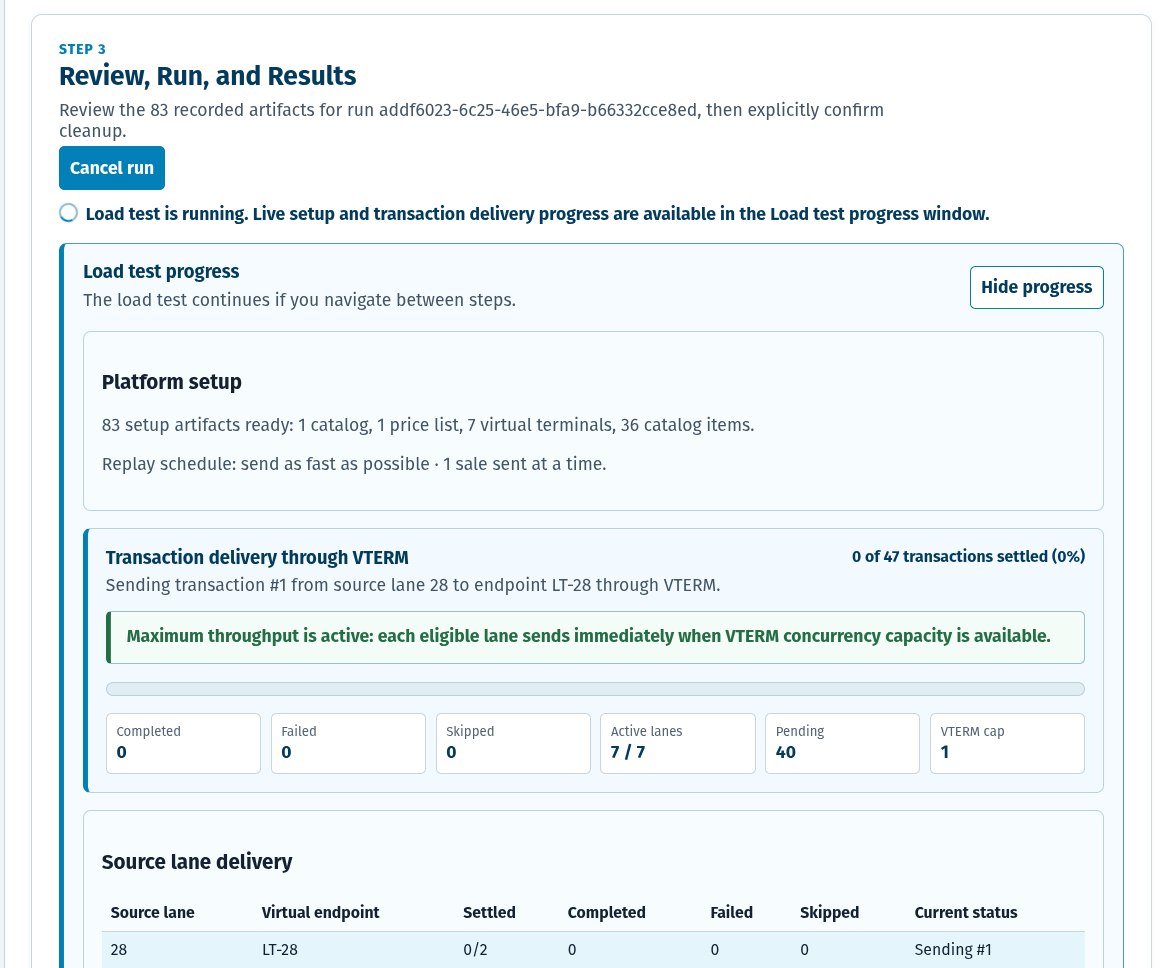
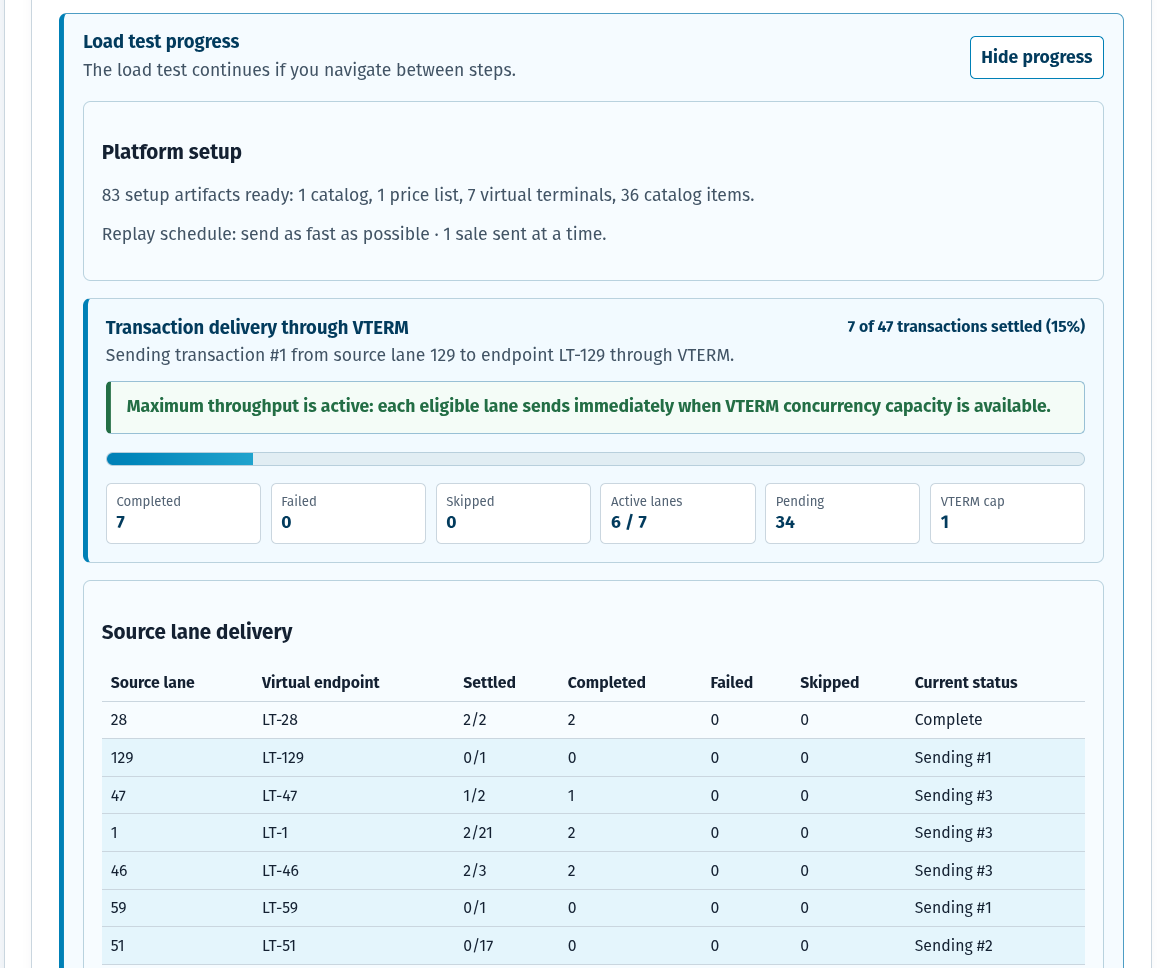
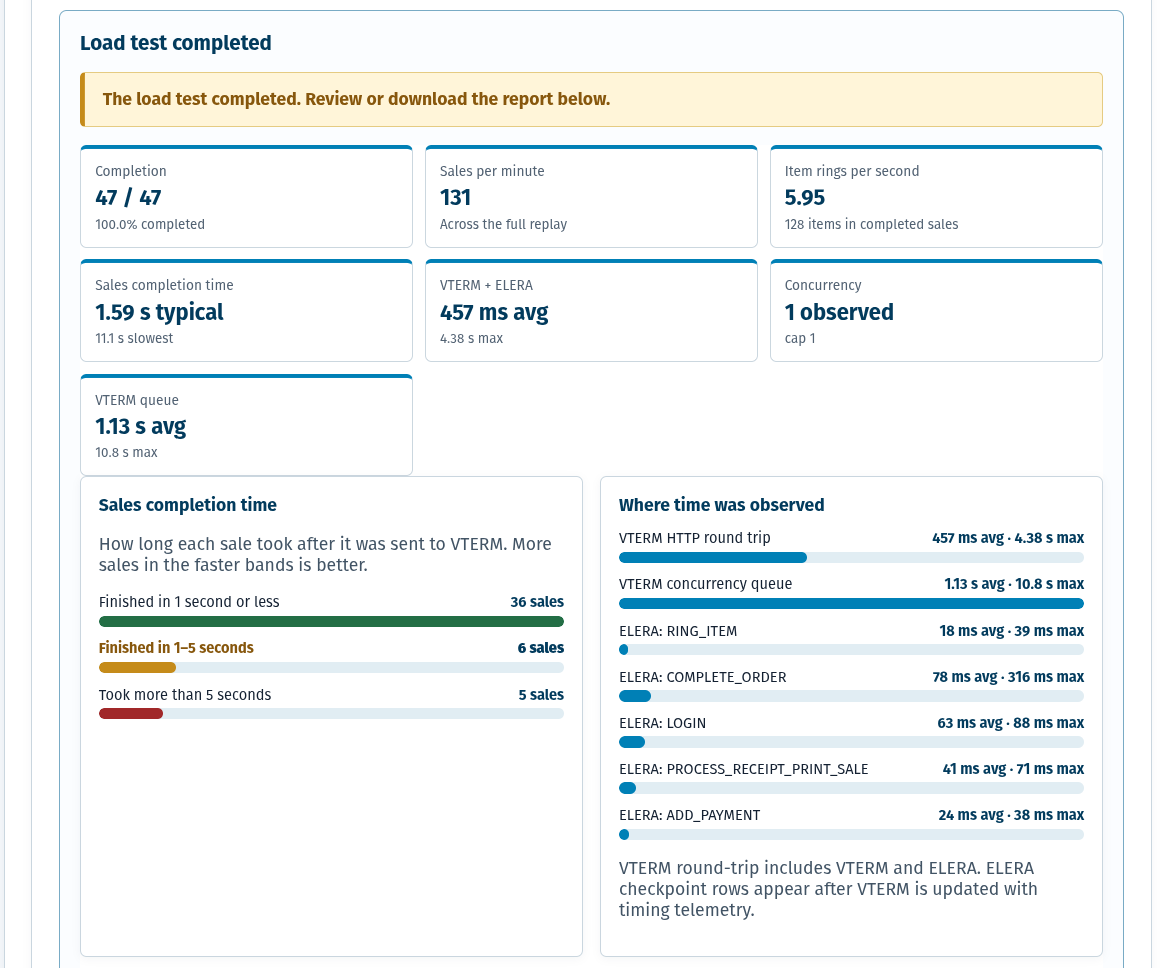
The console pairs a production transaction log with its matching item file, analyzes the real store's sale and lane patterns, then performs a controlled replay against an isolated ELERA node. It creates only the temporary catalog, pricing, and virtual-terminal configuration needed for the run. REDList VTERM drives the normal POS transaction workflow and the console reports throughput, timing, and failures in retail-readable terms.
The guided workflow
- Analyze the sources. The transaction log supplies transactions, lanes, and timing; the item file supplies matching item records and prices. Both inputs are read-only.
- Define the run and check readiness. Choose the isolated node, VTERM user, endpoints, timing, concurrency, and failure policy. A read-only preview explains exactly what the run needs.
- Approve, provision, and replay. After explicit approval, the console creates its temporary artifacts and VTERM delivers the production-shaped sales.
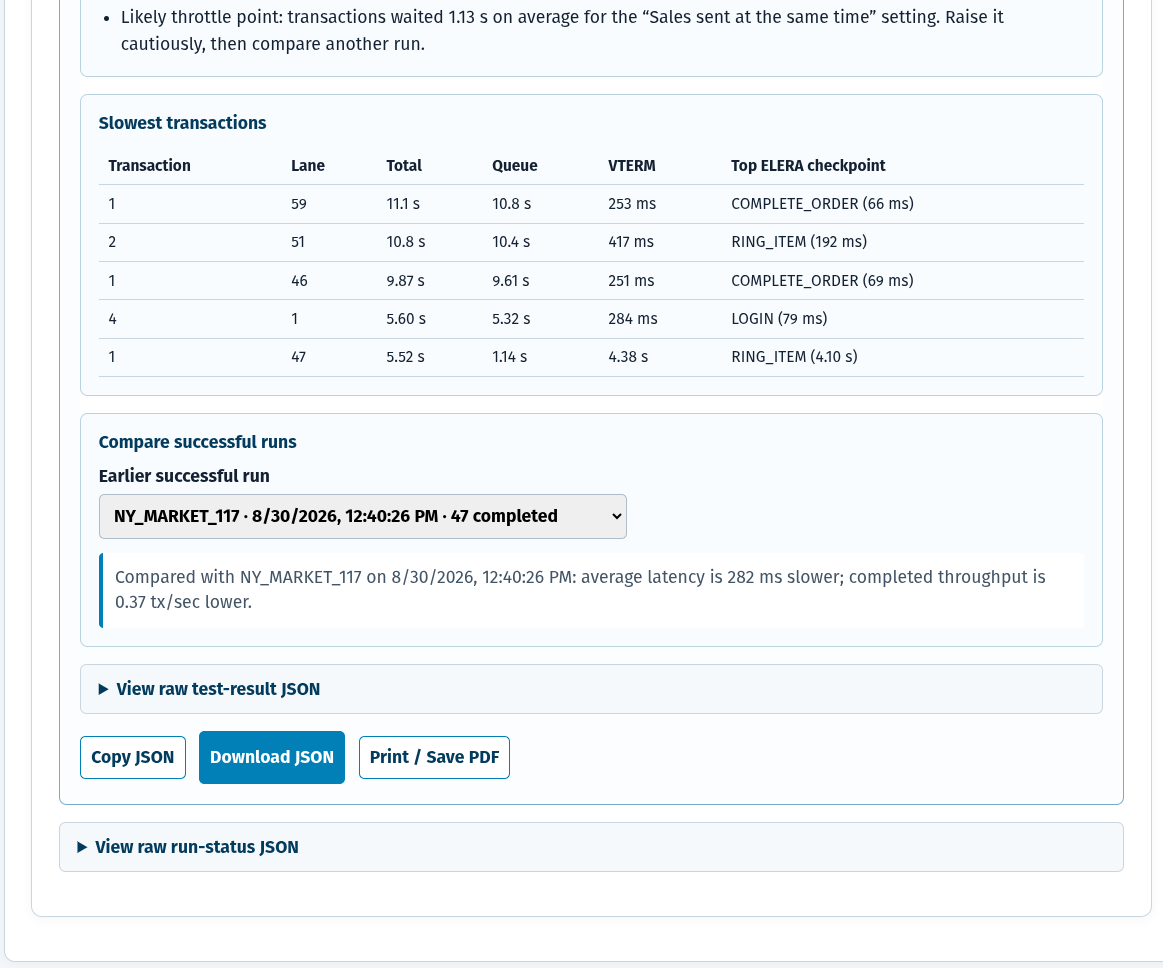
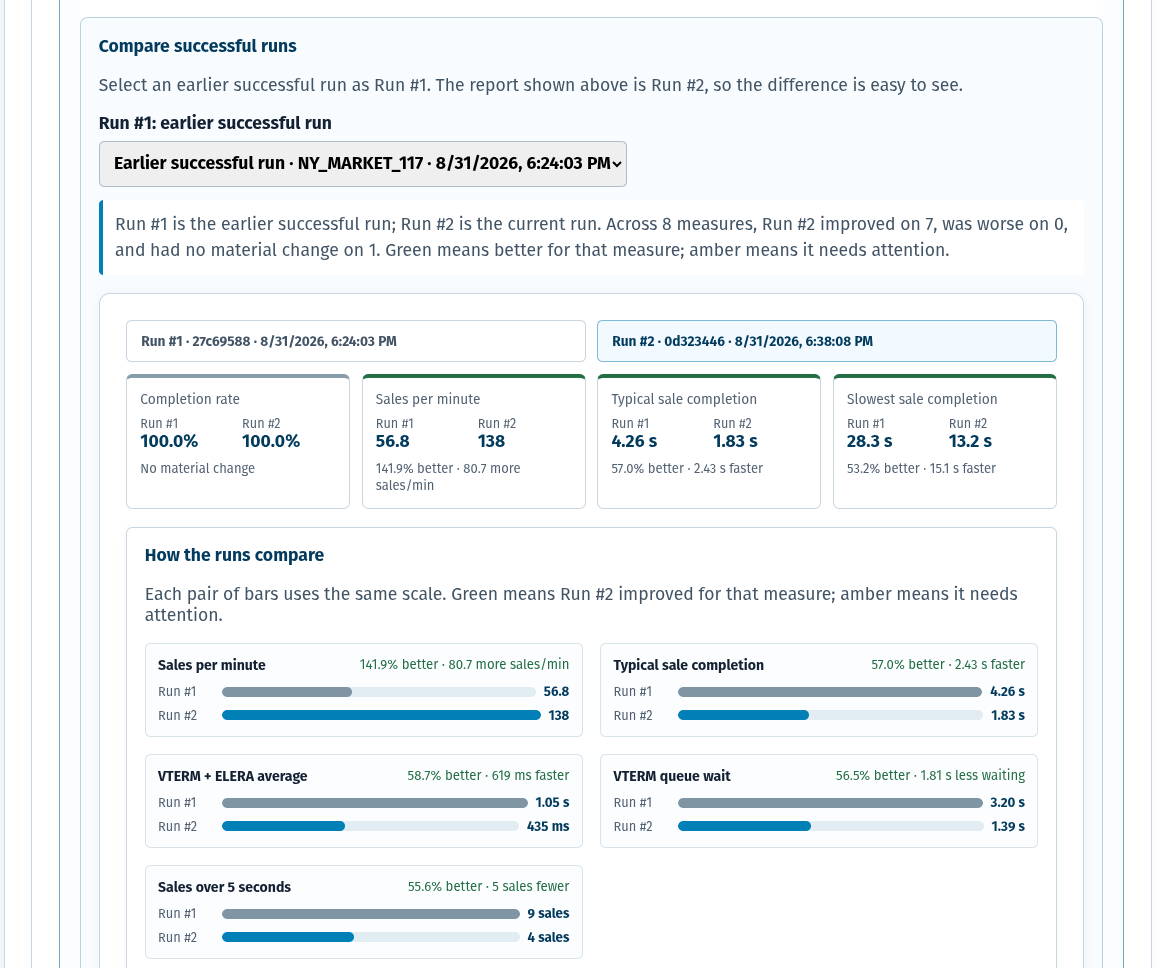
- Review and clean up. Inspect results and run-to-run comparisons, then remove only the artifacts owned by that run.
What the run creates—and how long it lives
Parsed source dataHeld in process memory for analysis and replay.
Run catalog and itemsTemporary ELERA configuration owned by the run.
Price list and recordsCreated for realistic item rings, then eligible for cleanup.
Node associationTemporarily changed when needed and restored afterward.
Virtual terminals and rolesDedicated to source lanes and removed only when run-owned.
Transactions and till activityRemain in ELERA as test evidence; cleanup does not erase them.
Pending-cleanup ledgerPreserves recovery work if cleanup cannot finish immediately.
Audit and comparison historySupports review and a meaningful next-run baseline.
Security and cleanup safeguards
- ELERA credentials and platform calls stay on the server; the browser does not store the credentials.
- Every platform-changing plan is shown before approval, and mutating requests are protected.
- Cleanup is ownership-aware: reused or pre-existing ELERA objects are never treated as disposable run artifacts.
- If a cleanup step fails, the ledger records the remaining work rather than pretending the environment is clean.