Next-Generation TLOG Platform
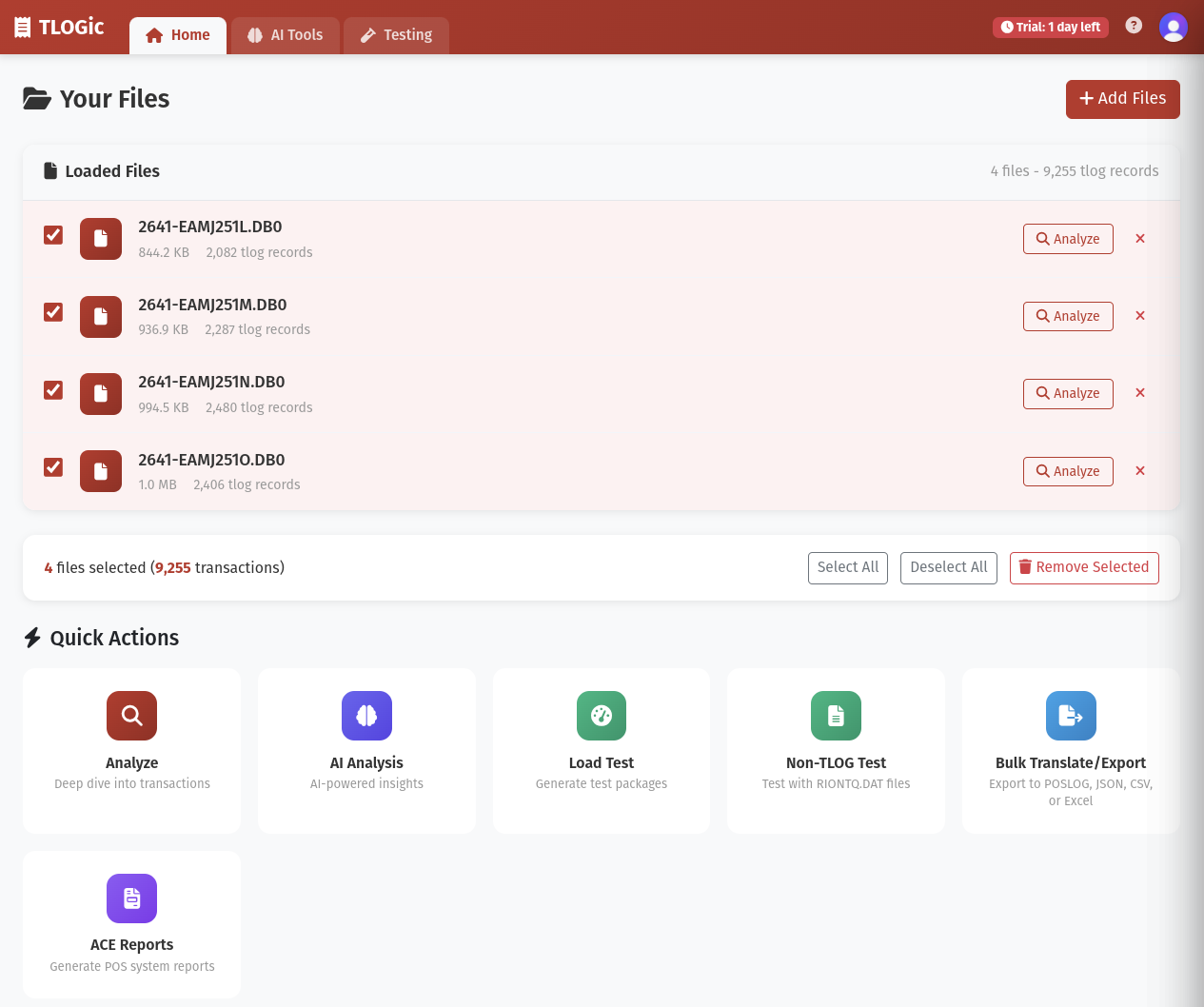
TLOGic is REDList's next-generation platform for IBM/Toshiba transaction-log analysis. It combines fast local processing, operational analytics, AI-assisted insight workflows, and load-testing tools for enterprise retail teams.
From day-to-day transaction diagnostics to performance benchmarking and AI-driven analysis, TLOGic is built to turn raw POS data into trustworthy, actionable decisions.
TLOGic spans core transaction analysis, operational KPI views, AI exploration, and testing workflows in one interface, making it easier for engineering and operations teams to collaborate on the same data foundation.
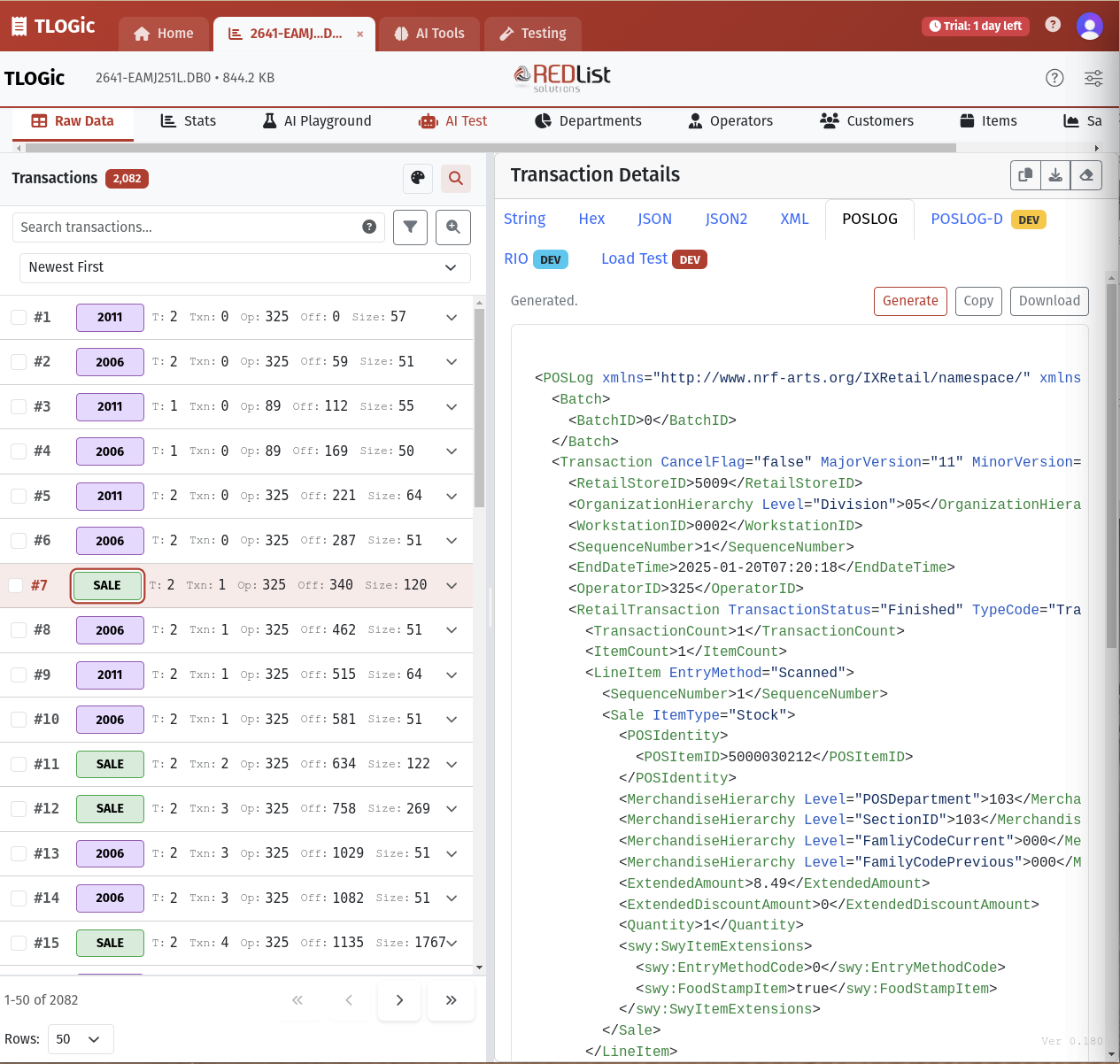
Inspect raw transaction details, transform output formats (JSON/XML/POSLOG), and drill into operational data quickly for root-cause analysis.
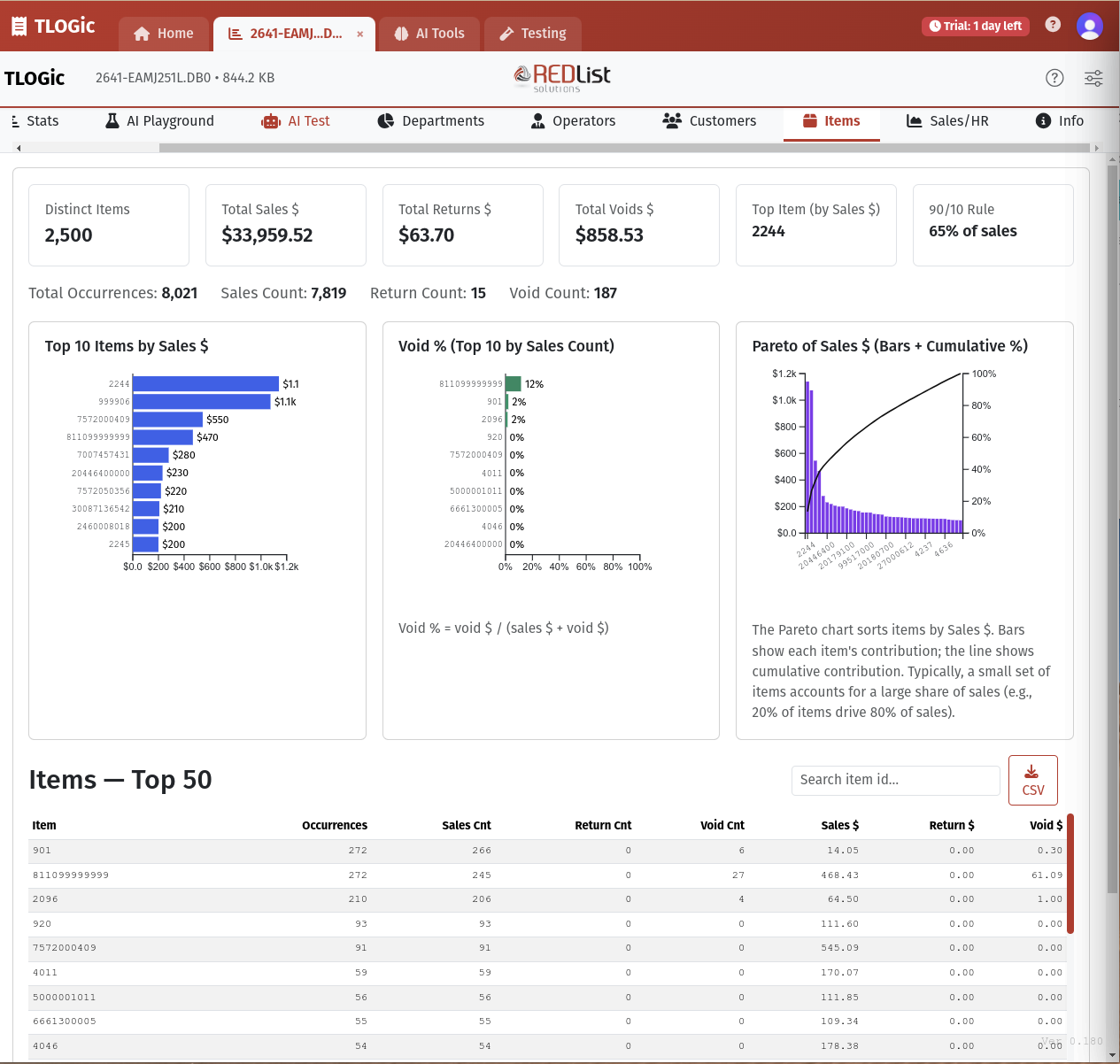
Review departments, operators, customers, and item-level metrics with dashboard-style summaries that help teams identify trends and anomalies.
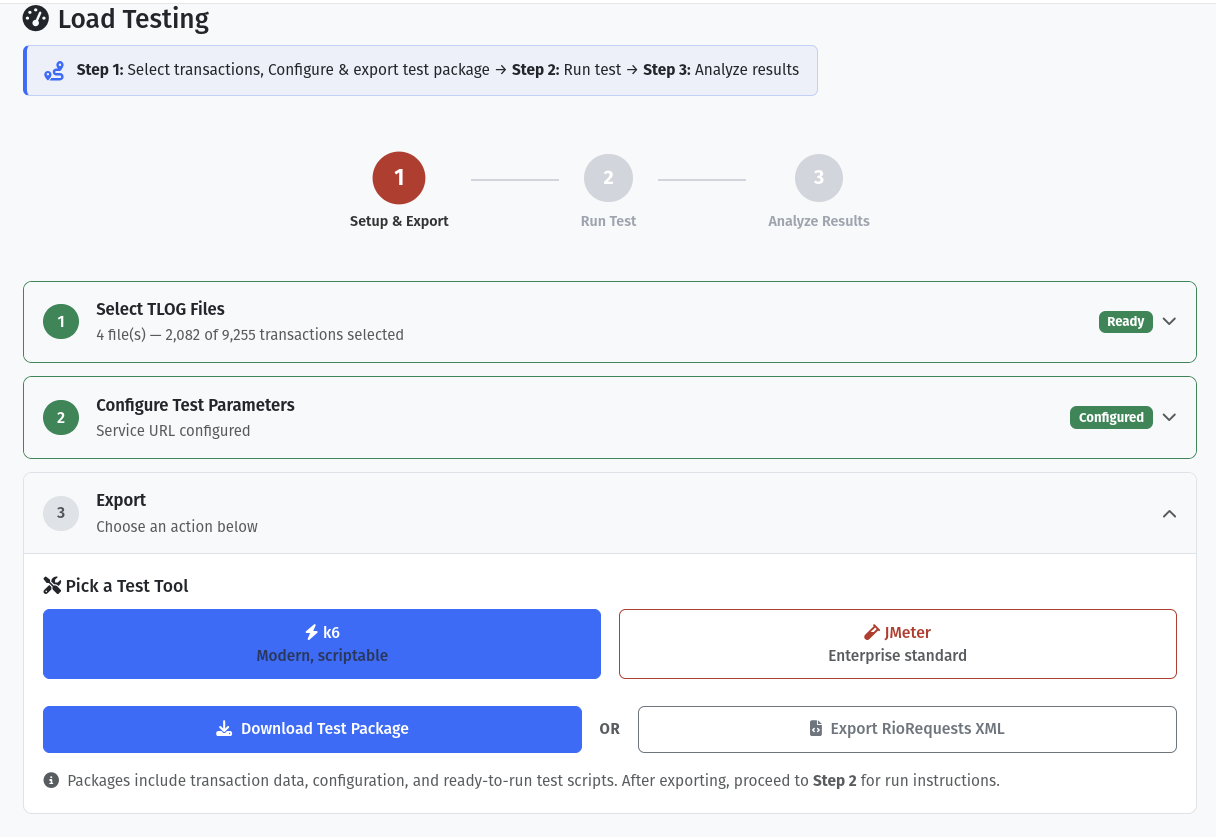
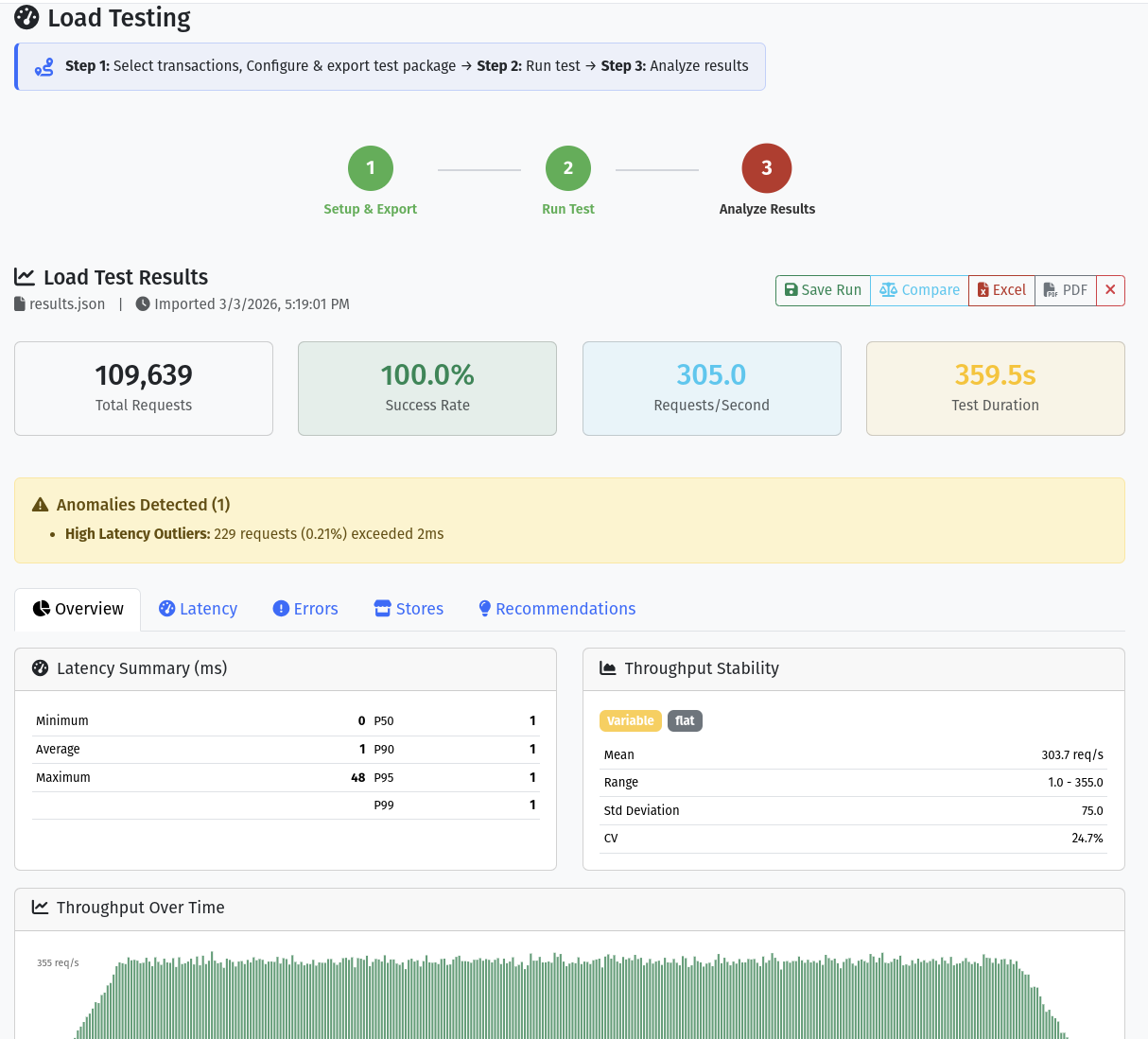
Create ready-to-run load test packages for k6 and JMeter, then analyze throughput, latency, and error behavior from test results.
Transaction processing is designed to happen client-side in the browser using WebAssembly, with local handling of sensitive analysis workflows.
TLOG parsing and analysis are performed locally in-browser, reducing unnecessary movement of transaction data.
AI provider API keys are configured by the customer and kept local to the browser context, with data sent directly to the selected provider for analysis.
The platform aligns around practical controls for authentication, observability, and dependable behavior in high-volume retail environments.
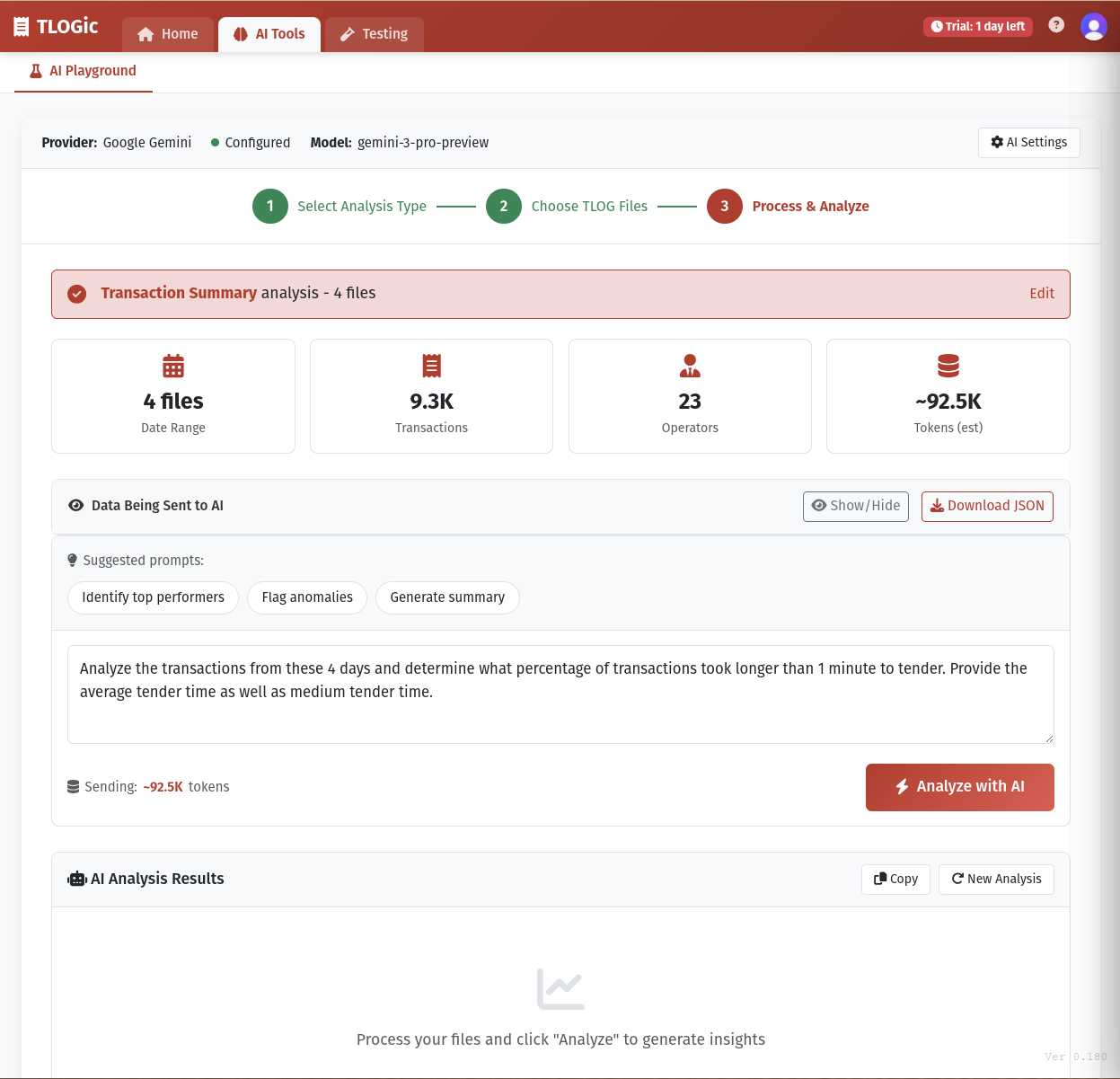
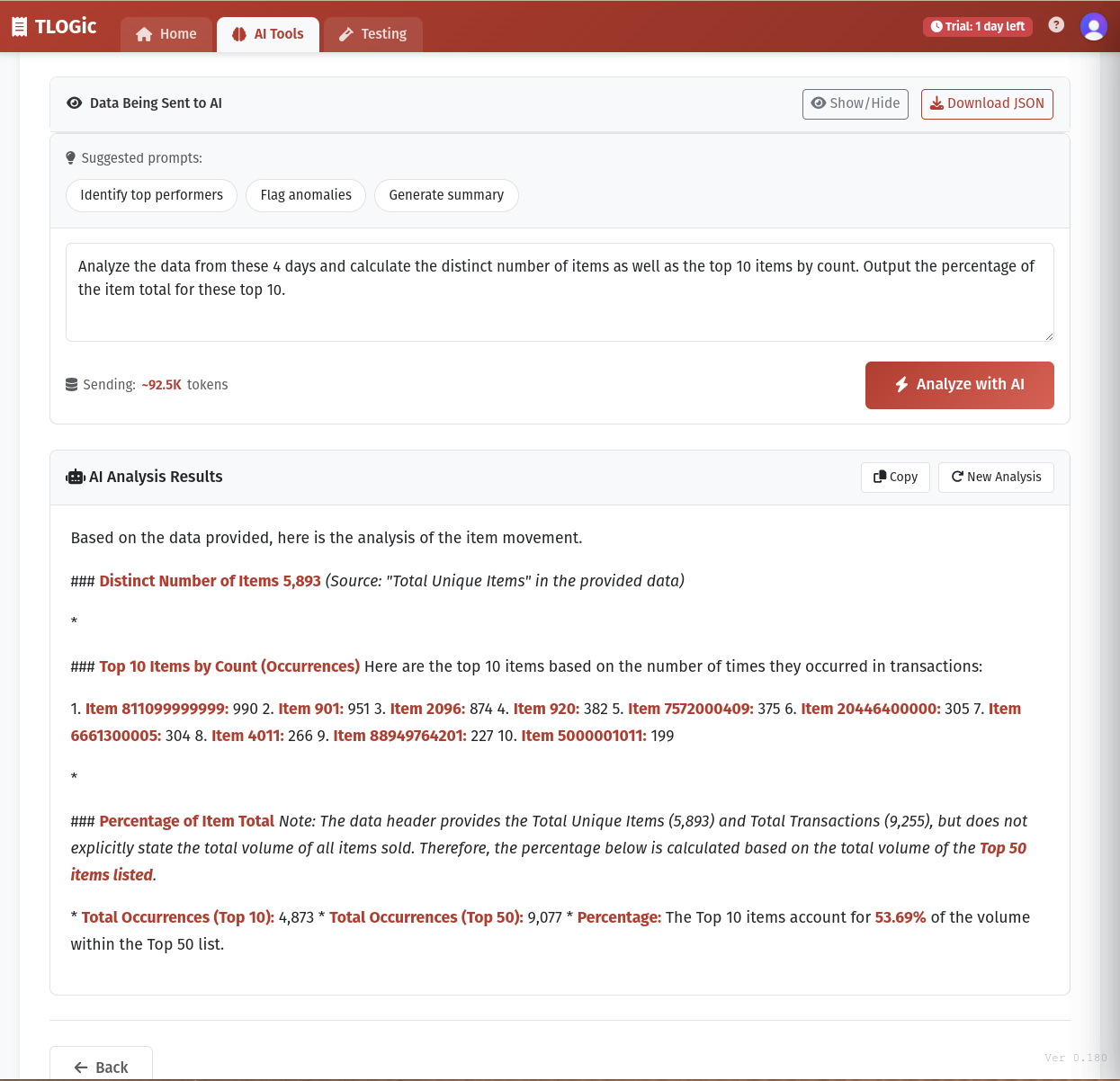
TLOGic emphasizes high-performance processing with WASM-based parsing/filtering, plus an AI Playground workflow for structured prompts, multi-file analysis, and actionable recommendations.
WebAssembly-backed parsing and filtering support fast interaction loops when exploring large transaction sets.
Generate complete k6/JMeter test packages from real transaction data, then measure throughput and latency for realistic RIO Server benchmarking.
Run guided AI analysis across TLOG files to identify anomalies, compare performance patterns, and generate operator-focused recommendations.